
Proving that a house is uninhabitable to the tax authorities is not just a matter of sending a letter. The owner must compile a file that demonstrates a material impossibility to occupy the dwelling, and not just a minor inconvenience or a comfort renovation. Article 1389 of the General Tax Code provides for a property tax relief under strict conditions, but the burden of proof rests entirely on the taxpayer.
Article 1389 of the CGI: what the text really requires from the owner
The relief mechanism is based on two cumulative conditions that many owners underestimate. The vacancy of the property must last at least three consecutive months and apply to the entire property (or to a part that can be rented separately). The mere absence of a tenant or the undertaking of works is not sufficient.
The decisive point lies in the wording of the text: the vacancy must be independent of the owner’s will. A property left empty by choice, awaiting sale or comfort renovations, does not meet this criterion. The administration clearly distinguishes between comfort renovations (new tiling, painting, fitted kitchen) and the material impossibility of living in the property.
To delve deeper into the legal framework and the concrete steps of the procedure, you can learn more on Public Immo before compiling your file.
Uninhabitable or simply uncomfortable: the distinction that can sway the case
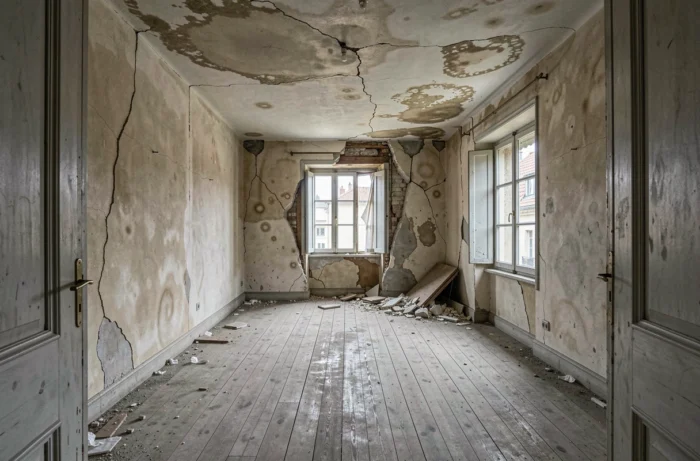
The tax authorities apply a technical reading grid. They look for objective elements that make the dwelling unfit for habitation, not temporary inconveniences. The difference between a granted relief and a refusal often hinges on the nature of the evidence provided.
Situations recognized as constituting uninhabitability include:
- The total absence of a drinking water supply or electricity, documented by a certificate from the provider or a bailiff’s report
- Proven structural risks (collapsed floor, compromised framework, cracked load-bearing walls) confirmed by a building expert’s report
- A prefectural order of unsanitary conditions or danger, which constitutes the strongest proof as it comes from a public authority
- The complete removal of sanitary facilities or heating systems, rendering the dwelling non-compliant with minimum habitability standards
On the other hand, a renovation quote for remodeling a bathroom or installing a new boiler does not demonstrate uninhabitability. The administration assesses whether the dwelling can physically be occupied, not whether it meets current comfort standards.
Declaring an uninhabitable property on impots.gouv.fr: the real process
The procedure goes through the “Real Estate” service in the personal space on impots.gouv.fr. The owner must select the relevant property, click on “occupancy declaration,” and then indicate the reason for the vacancy. Among the options provided, the category “uninhabitable property (unsanitary housing)” corresponds to the case discussed here.
The process requires entering the date when the property became unoccupied. This date is crucial as it serves as the starting point for calculating the vacancy period. The relief is proportional to the duration of unoccupancy, calculated from the first day of the month following the month in which the vacancy began.
A recurring point of friction in feedback from owners is that the interface does not always clearly distinguish between “vacant” and “uninhabitable.” Some personal tax services (SIP) advise declaring the property as vacant, then attaching the evidence of uninhabitability via secure messaging. Field responses on this point vary according to public finance centers, making direct contact with the SIP responsible for the property useful.
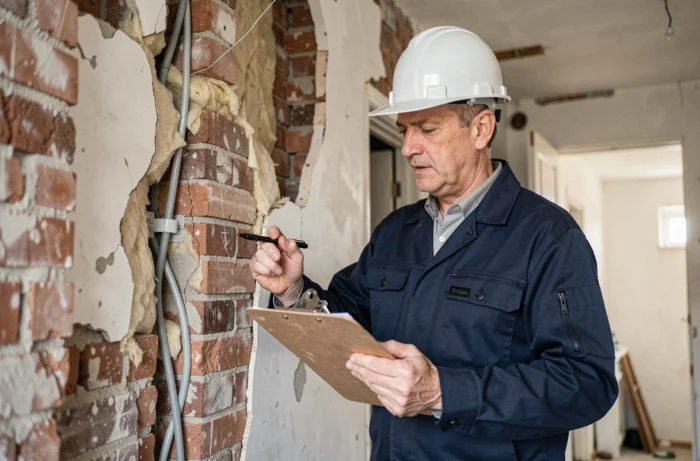
Supporting documents to provide: compiling a file that the administration cannot refuse
The file must establish a body of consistent evidence. A single isolated document rarely convinces. The combination of several technical and administrative elements strengthens the request.
- Datable photographs showing the state of the premises (water damage, absence of flooring, removed installations), with the date of the photo indicated in the metadata
- A report from a building expert or architect describing the issues and concluding that it is impossible to inhabit the property in its current state
- A certificate from the insurer in case of a disaster (fire, flood, natural disaster) specifying the nature and extent of the damages
- A declaration of unsanitary conditions or danger issued by the town hall or prefecture
- Termination or suspension letters for energy and water contracts, which corroborate the effective vacancy
A prefectural order of unsanitary conditions remains the most difficult document to contest for the administration. When it exists, the relief file succeeds in the vast majority of cases.
Property tax, tax on vacant housing: the fiscal mechanisms do not overlap
The property tax relief provided by Article 1389 of the CGI and the taxes on vacant housing (TLV or THLV) follow distinct logics. The TLV applies in municipalities located in continuous urbanization zones with more than 50,000 inhabitants. The THLV may apply to other municipalities that have instituted it by deliberation.
A property recognized as uninhabitable may escape property tax through a relief, but the TLV or THLV is not automatically removed as a result. The owner must check if their property falls within the scope of these taxes and, if applicable, contest separately by demonstrating that the vacancy results from an impossibility to inhabit and not from a choice of retention.
The SIP agent may request an on-site visit to assess the actual condition of the property. This visit is not systematic but occurs when the documentary file leaves room for doubt. The owner has an interest in keeping the property in the declared state until the closure of the investigation, under penalty of having their request requalified.
The relief is never retroactive beyond the current year and the previous year. An owner who discovers their rights late loses the benefit of previous years. Submitting the request as soon as the vacancy begins remains the safest strategy to preserve the full relief.