
The regulatory framework for services to seniors has changed direction. The PLFSS 2026 allocates 100 million euros to autonomy residences and inclusive housing, and an additional 150 million to nursing homes and the strengthening of specialized home care teams. We observe a clear signal: public funding now prioritizes intermediate forms of support, between isolated home care and medicalized accommodation. Understanding this service architecture allows for the mobilization of the right resources at the right time.
Reform of SSIAD and coordination of home care
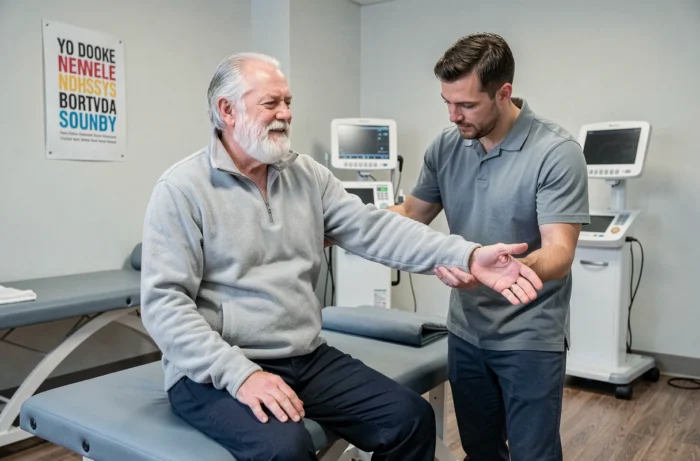
Home nursing services are undergoing a profound restructuring. The PLFSS 2026 plans for their reform with an increase in human resources, notably the doubling of specialized Alzheimer teams at home, now extended to all neurodegenerative diseases. This is no longer a niche service: care now covers Parkinson’s disease, multiple sclerosis, and related dementias.
The key technical point to remember concerns the mode of intervention. A restructured SSIAD operates in coordination with the attending physician, the liberal nurse, and the caregiver. Medical prescription remains the trigger, but the aid plan now includes respite care for caregivers, funded from the same budget. For families, this means that a single point of contact (the SSIAD) can coordinate nursing care, cognitive stimulation, and caregiver relief.
In parallel, we recommend checking whether the department has deployed a Home Autonomy Service (SAD), resulting from the merger of former SSIADs and home help services. This merger, still uneven across territories, simplifies administrative procedures when effective. The services on Seniors du Monde help identify active structures in each living area, a useful reference when the local offer remains fragmented.
Inclusive housing and autonomy residences: the underestimated alternative
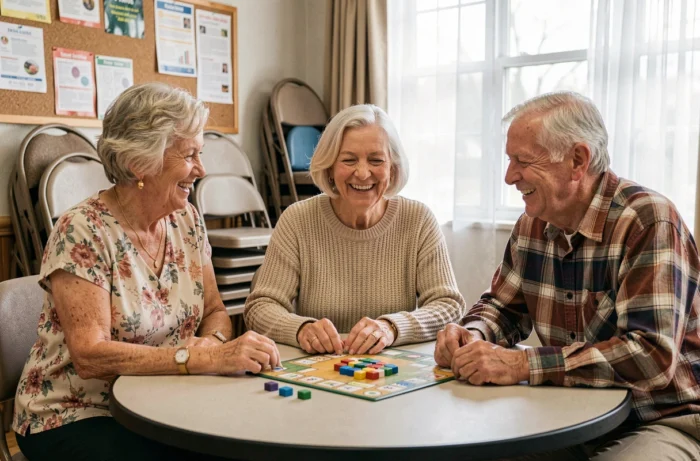
The 100 million euro budget of the PLFSS 2026 explicitly targets three formats: autonomy residences, senior service residences, and inclusive housing. These structures share a common principle, that of maintaining autonomy without isolating the person, but their legal statuses and costs differ.
Autonomy residence versus service residence
An autonomy residence falls under the medico-social sector. It is eligible for social assistance, which entitles low-income individuals to departmental ASH. The rent includes a base of collective services (catering, activities, security monitoring).
The senior service residence, on the other hand, falls under commercial law. The resident signs a standard lease and subscribes to a package of optional services. There is generally no eligibility for social assistance. The out-of-pocket expenses are therefore significantly higher, but the freedom to choose services is total.
- Autonomy residence: regulated price, possible access to ASH, mandatory collective services, primarily for GIR 5-6 public
- Service residence: free pricing, no ASH except in exceptional cases, à la carte services, autonomous public without GIR restrictions
- Inclusive housing: ordinary shared housing with a social life project, eligible for shared living assistance (AVP) provided by the department
Inclusive housing remains the least known format. It is based on a social life project carried out by a managing organization. Shared living assistance finances the animation and coordination, not the housing itself. It is a lever for seniors who refuse institutional collective living but wish to break isolation.
Home APA funding: a decline in beneficiaries
The number of beneficiaries of home APA has decreased by about 0.7% over one year, to 820,600 people. This decline, counterintuitive in light of demographic aging, is partly explained by the tightening of GIR assessments and non-utilization. Many eligible seniors do not submit an application, due to lack of information or reluctance to declare a loss of autonomy.
For professionals, this figure signals a lack of orientation. The GIR assessment conditions access to APA, but it also conditions the volume of home help hours allocated. A classification in GIR 4 opens a capped aid plan at a modest monthly amount, often insufficient to cover daily assistance.
Linking APA, extra-legal aids, and tax credits
We recommend never considering APA as an isolated scheme. Three complementary levers exist:
- Extra-legal aids from pension funds (notably Agirc-Arrco, which finances home maintenance projects through calls for projects like Ideadom)
- The tax credit for home employment, which covers half of the remaining expenses within the fiscal ceiling
- CESU pre-financed by certain mutuals or local authorities, which reduce the immediate out-of-pocket expenses without waiting for tax reimbursement
The combination of these three sources significantly reduces the actual cost of regular home assistance. A common pitfall is to apply for APA alone, only to find that the aid plan covers only a fraction of the need, without exploring available supplements.
Teleassistance and connected devices: beyond the pendant
The teleassistance market has gone beyond the simple alert button. Current devices integrate motion sensors, automatic fall detectors, and GPS beacons for individuals with cognitive disorders. The choice of device depends on the risk profile: a mobile but disoriented person does not need the same equipment as a person with reduced mobility living alone.
Funding for teleassistance comes through APA (if included in the aid plan), certain mutuals, or extra-legal aids from pension funds. The monthly cost varies according to the level of service, but the tax credit also applies when the subscription is taken out with an approved personal services organization.
The architecture of services for seniors in 2026 relies on the articulation between coordinated care, adapted housing, and cumulative financial aids. The decline in the number of APA beneficiaries shows that the issue is no longer just about creating devices, but ensuring that the individuals concerned actually access them.