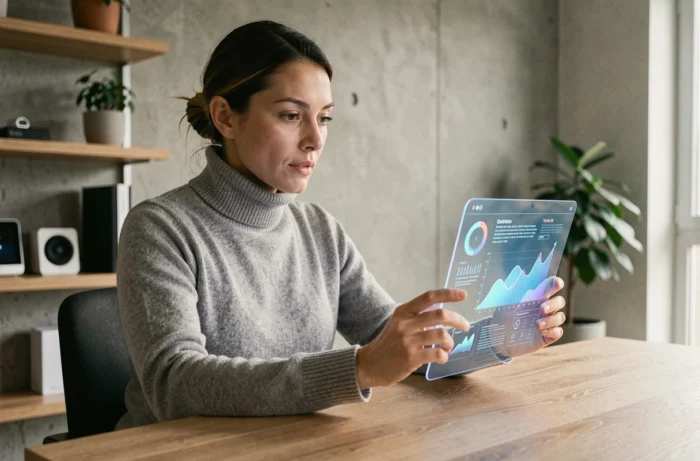
A thermostat that adjusts the heating before we wake up, a prescription verified by an algorithm at the pharmacy, a phone repaired thanks to a public bonus rather than replaced: the technological innovations of 2024 are primarily measured by how they change our daily actions. Several breakthroughs, driven by artificial intelligence, European regulations, or 5G connectivity, are reshaping how we work, take care of ourselves, and consume.
European Regulation on Artificial Intelligence: What Changes in Practice
Before discussing features, we must talk about the framework. The European AI regulation came into effect on August 1, 2024. Its principle: to classify each use of artificial intelligence according to a risk level, then impose proportional obligations on companies.
For a healthcare professional, this means that diagnostic assistance software will have to meet much stricter transparency and traceability requirements than a customer service chatbot. For a recruiter, an automatic CV sorting tool falls into the category of high-risk systems.
We are following these regulatory developments and their repercussions on everyday technologies, particularly on the page: https://www.nouvelletechnologie.fr/, which lists recent advancements and their application context.
The risk-based approach requires manufacturers to document their algorithms and provide for human recourse. In practice, the obligations are applied progressively, allowing SMEs a period of adaptation, but requiring large publishers to revise their processes immediately.
Generative AI at Work: Rapid Adoption, Measured Effects
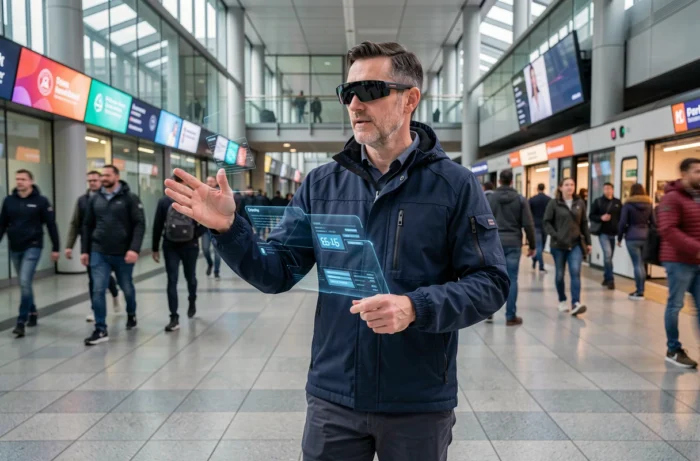
It is often said that generative AI is disrupting the world of work. Initial field feedback nuances this claim. A survey conducted among workers in Denmark, at the end of 2023 and then at the end of 2024, examined the use of AI chatbots and changes in task organization.
The results show real adoption: writing reports, summarizing documents, responding to recurring emails. However, no increase in hours worked or revenue was observed in this study.
This gap between adoption and measurable productivity is partly explained by the learning curve. Configuring an effective prompt, verifying the output of a language model, integrating the tool into an existing business workflow: all of this takes time. The companies that make the best use of these tools are those that have restructured specific tasks rather than deployed AI “everywhere.”
Three Use Cases That Are Already Working
- Automatic meeting summarization, coupled with a video conferencing tool, significantly reduces the time spent writing internal notes
- Sorting and categorizing customer support tickets, where the model classifies requests by urgency and directs them to the appropriate service
- Generating first drafts of marketing content, which the team then revises to inject the brand voice
The common thread of these uses is: AI takes on a repetitive and bounded task, not a strategic decision. This is where the gains are most tangible.
Repair Bonus and Digital Sustainability: Technology Through Maintenance
Technological innovations do not only come from new devices. In France, the repair bonus, launched under the AGEC law, provides a direct discount on certain repairs carried out by QualiRépar certified repairers.
This includes smartphones, tablets, laptops, but also kitchen robots or connected lawnmowers. Extending the lifespan of a device becomes a genuine technological choice, supported by a public mechanism.

This mechanism changes the game for both consumers and manufacturers. On the user side, repairing a phone screen costs less thanks to partial coverage. On the manufacturer side, regulatory pressure pushes for the design of products with replaceable parts.
What This Means in Daily Life
A repairable device is not just an ecological gesture. It is also a device whose cost can be better controlled over several years. The repair bonus, combined with the repairability index displayed in stores, gives consumers two concrete criteria to make purchasing decisions.
The limitation of this mechanism lies in the geographical coverage of the QualiRépar network, which varies by department and product categories.
5G and Connected Objects: The Invisible Layer of Everyday Life
The deployment of 5G, continued throughout 2024, is not just about faster speeds on a smartphone. Its main contribution concerns the simultaneous connection of a large number of objects within the same perimeter: agricultural sensors, energy meters, home medical monitoring devices.
In the energy sector, smart meters transmit real-time consumption data, allowing for adjustments in production and smoothing out demand peaks. In healthcare, wearable devices send measurements (heart rate, blood sugar) directly to the treating physician without a visit to the office.
- In agriculture, soil moisture sensors reduce irrigation cycles by adapting watering to the actual needs of the plot
- In logistics, real-time tracking of packages improves the accuracy of delivery windows
- In home automation, remote control of heating and lighting relies on the low latency of 5G to react in milliseconds
The challenge for the coming years is no longer the network deployment itself, but the interoperability between devices. A sensor from one manufacturer must be able to communicate with a platform from another without a proprietary gateway, lest the ecosystem becomes fragmented.
The technological innovations that mark 2024 share a common trait: they do not require the general public to radically change their habits. The European AI regulation frames tools already in use. The repair bonus applies to devices we already own. 5G enhances existing services without requiring a new specific subscription. It is in this subtlety that their real impact on daily life lies.