The Egyptian cuisine largely relies on legumes, grains, and vegetables grown in the Nile Valley. This millennia-old agricultural base explains why a significant portion of the Egyptian culinary repertoire is naturally vegetarian, without having been conceived as such in the modern sense. Fava beans, lentils, rice, and fresh herbs form the backbone of complete, nourishing, and inexpensive meals.
Coptic Tradition and Siyami Cuisine: The Plant-Based Foundation of the Egyptian Table
Before detailing the dishes, one concept deserves to be established. The word siyami refers in Egypt to preparations that comply with Coptic fasting periods, during which animal products (meat, dairy, eggs) are excluded. These periods cover a significant part of the liturgical year, which has embedded a wide range of plant-based recipes into the culinary culture.
This tradition is not limited to Coptic Christians. Cairo restaurateurs regularly offer siyami dishes to all their customers. The term serves as a useful indicator for spotting animal-free preparations in restaurants or at street stalls.
A nuance to keep in mind: “vegetarian” in Egypt does not always mean “vegan.” Ghee (clarified butter) may be included in a foul, and some broths of molokhia or mahshi contain meat even when the dish appears plant-based. For a strictly animal product-free meal, it is better to check the nature of the broth and the fat used. Find more gourmet ideas on Monde Gourmandises to delve deeper into the subject.
Foul Medames and Ta’ameya: The Vegetarian Breakfast Duo of Egypt
The foul medames is the most consumed breakfast dish in Egypt. It is a puree of long-simmered fava beans, seasoned with garlic, lemon juice, and olive oil, served in pita bread. Traditional cooking is done in large copper pots, often overnight, which gives the beans a melting texture and deep flavor.
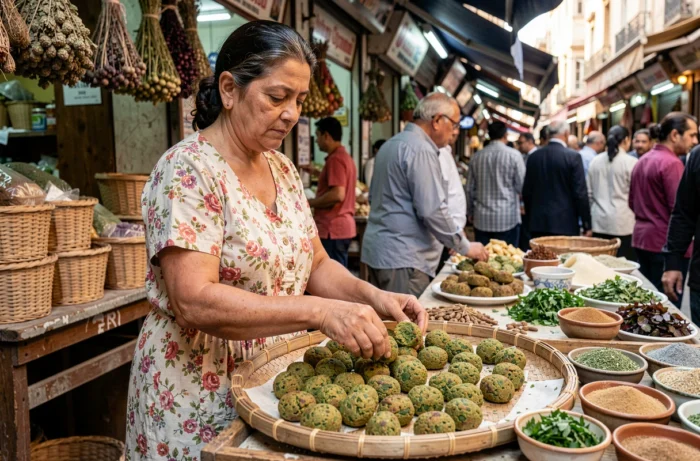
The ta’ameya (or taameya) is the Egyptian version of falafel, with a significant difference: it is made from fava beans and fresh parsley, rather than chickpeas as in the rest of the Mediterranean basin. The patties are flattened into disks rather than shaped into balls, then fried until they achieve a golden crust and a bright green center.
These two dishes are eaten together, often accompanied by raw vegetables, tahini, and baladi bread. They form a complete vegetarian meal from the early hours of the day.
Koshari: The National Dish of Egypt and Its Layers of Legumes
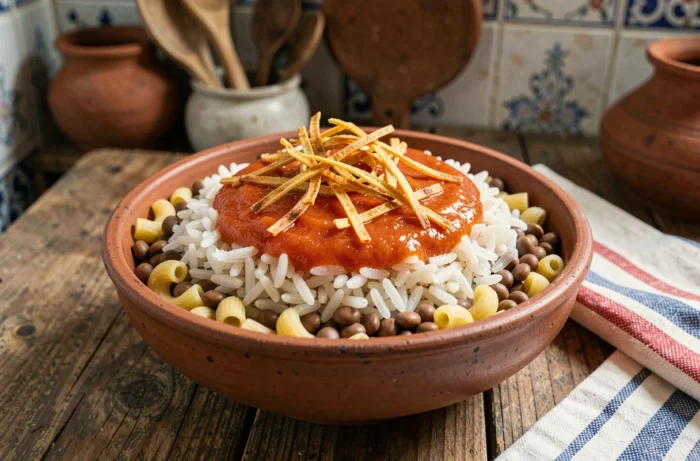
The koshari (also spelled kochari or kochary) is the national dish of Egypt. Its composition layers rice, brown lentils, macaroni, chickpeas, crispy fried onions, and a spicy tomato sauce. Everything is served in a single bowl, mixed at the time of eating.
Specialty shops serve only this dish, all day long, in adjustable portions. Koshari is one of the cheapest meals in the country and one of the most filling. Its richness in plant-based proteins (combined lentils and chickpeas) makes it a staple of Egyptian vegetarian cuisine, even though it was never designed as such.
The Sauce of Koshari Makes the Difference
Two sauces accompany the dish: a tomato sauce with vinegar and cumin, and a spicy sauce made from chili. The balance between acidity, spiciness, and the crunch of fried onions distinguishes a good koshari from an ordinary dish. Each establishment keeps its own sauce recipe.
Besara, Mahshi, and Lentil Soup: Lesser-Known Egyptian Vegetarian Dishes
Beyond the classics, the Egyptian plant-based repertoire includes more discreet preparations that deserve attention.
- The besara is a thick puree of dried fava beans mixed with coriander, dill, and garlic, served warm with a drizzle of oil and fried onions. It falls under home cooking and rarely appears in tourist guides.
- The vegetarian mahshi consists of vine leaves, zucchini, or eggplants stuffed with a mixture of rice, herbs, tomato, and spices. The siyami version excludes butter and animal broth, resulting in a lighter outcome focused on the herbs.
- The coral lentil soup, blended and spiced with cumin, is a winter dish and a classic of iftar during Ramadan. Its preparation is quick and its cost very low.
Dolma, Fattoush, and Baba Ghanoush: Completing an Egyptian Vegetarian Meal
The Egyptian dolma (vine leaves stuffed with fragrant rice) stands out from its Turkish or Lebanese cousins by a more pronounced seasoning of tomato and spices. Served cold or warm, it works as a mezze or a side dish.
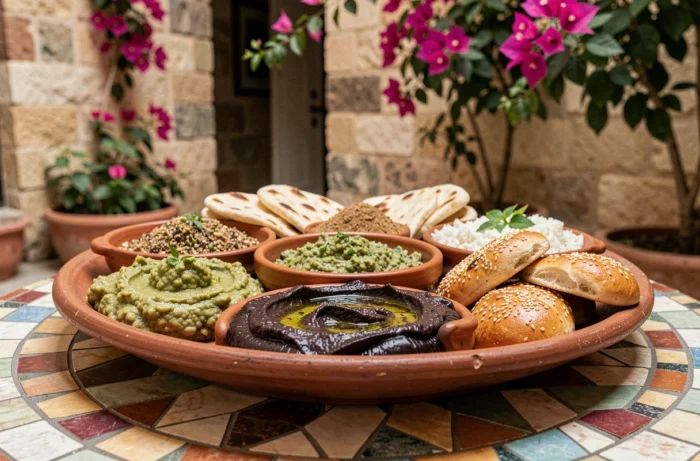
Baba ghanoush, a puree of grilled eggplants with tahini and lemon, is present on most Egyptian tables. The eggplant is cooked directly over the flame, giving it a characteristic smoky flavor. Combined with baladi bread and a salad, it constitutes a complete light meal.
To compose a varied vegetarian meal in the Egyptian style, the idea is not to choose a single dish but to assemble several preparations:
- A dish of fava beans or lentils for protein (foul, besara, or koshari)
- One or two vegetable mezze (baba ghanoush, tahini, dolma)
- Fresh bread (baladi or pita) as a vehicle for purees and sauces
- Pickles (torchi) and fresh herbs for acidity and freshness
This logic of small shared dishes makes Egyptian cuisine naturally suited to a meal without meat or fish, without the need to seek substitutes.
The experience also varies depending on the time: foul and ta’ameya in the morning, koshari during the day, mahshi and vegetable molokhia in the evening. A vegetarian traveler in Egypt does not need to adapt the local menu; they just need to know which dishes to ask for and to check the composition of the broth when in doubt.