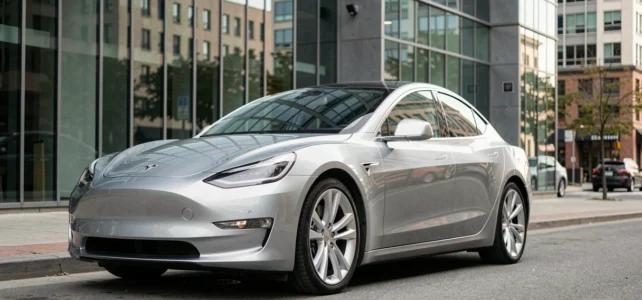
The automotive sector in 2024 is not just about new models or more powerful engines. The most significant changes are regulatory and software-related: since July 2024, every new vehicle registered in the European Union must meet cybersecurity requirements as stringent as those imposed on brakes or airbags. This shift redefines the very design of connected cars.
Automotive Cybersecurity: A Certification Requirement Since July 2024
Since July 7, 2024, no new car can receive a European registration without a valid Cyber Security Management System (CSMS) certificate. This requirement stems from the UN regulation UN R155, made mandatory by the EU regulation 2019/2144, known as the General Safety Regulation.
In practical terms, each manufacturer must prove that it manages the digital vulnerabilities of its vehicles throughout their lifecycle. Protection against remote attacks, monitoring of software vulnerabilities, and internal incident response processes are now part of the certification file, alongside frontal crash resistance.
This requirement directly impacts connected innovations: an infotainment system, a driving assistant, or an automated parking function can no longer be marketed without having their digital attack surface audited. To keep up with these regulatory and technological developments, Media Libre’s automotive media regularly publishes detailed analyses on the subject.
OTA Software Updates: UN R156 Regulation Changes the Game
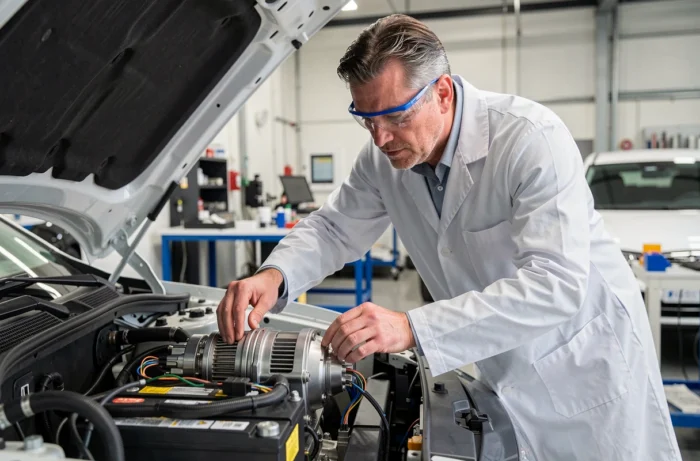
In addition to cybersecurity, the UN regulation UN R156 requires manufacturers to implement a Software Update Management System (SUMS). Since July 2024, all new registrations are affected, whether for over-the-air (OTA) updates or in-shop updates.
The principle is simple: every modification to the onboard software must be tracked, documented, and validated before deployment. The manufacturer remains responsible for the vehicle’s compliance after each update, even if it alters the behavior of a driver assistance system.
This regulatory framework has practical consequences:
- Manufacturers that previously offered OTA updates without formal traceability must now structure an internal approval process for each software patch
- Independent repair shops have more difficulty accessing updates, as the manufacturer must ensure the integrity of the deployment chain
- Recent used vehicles may see their value influenced by the remaining duration of software support guaranteed by the manufacturer
The car becomes a software product tracked over time, not just a physical asset sold once.
LiDAR Technologies and Advanced Driver Assistance Systems
LiDAR technology (Light Detection and Ranging) has reached a new level in terms of resolution and miniaturization. Current sensors generate 3D maps that are precise enough to distinguish a pedestrian from a pole at several dozen meters, even in low-light conditions.
This precision directly feeds into the advanced driver assistance systems (ADAS) that are increasingly equipping production vehicles. Autonomous emergency braking, active lane keeping, blind spot detection: these functions rely on data fusion from cameras, radars, and LiDAR sensors.
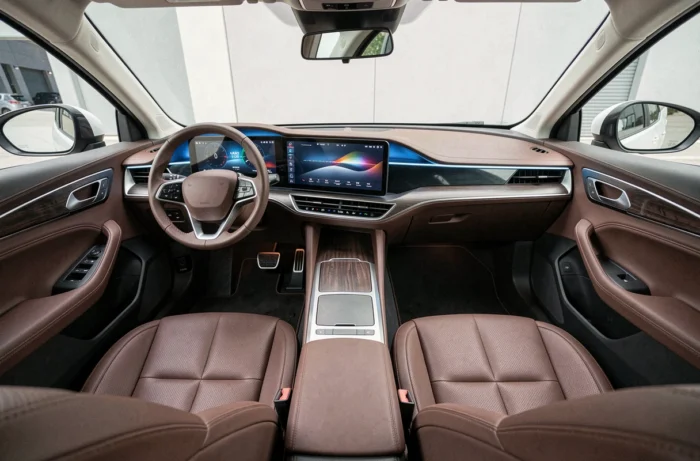
The connection to cybersecurity regulation is direct. An ADAS connected to the cloud for receiving map updates constitutes a potential attack surface. Therefore, the UN R155 regulation requires manufacturers to secure these data flows continuously, which sometimes slows down the deployment of new features but enhances overall reliability.
Batteries and Electric Powertrains: What Has Really Advanced in 2024
Electric vehicles continued their progress in the European market in 2024. The most tangible improvements concern battery chemistry: sodium-ion batteries are beginning to emerge as an alternative to lithium-ion cells for city cars and entry-level vehicles.
Their main advantage lies in the abundance of sodium compared to lithium, which reduces dependence on geographically concentrated supply chains. In return, their energy density remains lower, which currently confines them to vehicles with moderate range requirements.
On the hybrid side, French manufacturers have renewed several ranges with powertrains combining thermal and electric engines. These models target drivers who make most of their trips in urban areas but do not yet have reliable access to a home charging station.
- Sodium-ion batteries offer lower production costs and better tolerance to extreme temperatures
- Plug-in hybrids are gaining pure electric range, often exceeding the useful threshold for a commute
- The network of public charging stations continues to expand, with financial incentives maintained in several European countries
The choice between pure electric and hybrid still largely depends on local charging infrastructure.
The year 2024 will thus mark a less spectacular but more structural turning point than expected. The UN R155 and UN R156 regulations impose unprecedented software rigor, LiDAR sensors are gaining industrial maturity, and battery chemistries are diversifying. These advancements may not be immediately visible on a technical sheet, but they redefine what a new vehicle must guarantee its owner in terms of safety, software tracking, and technological durability.