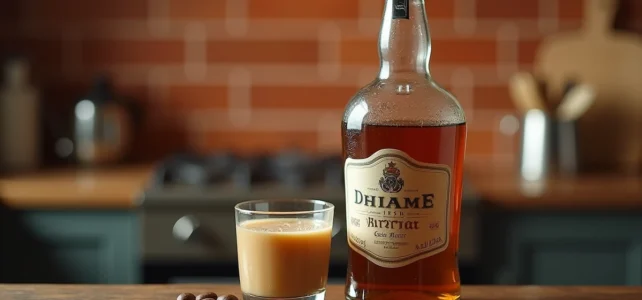
You find a bottle of Baileys that has been open for a few months at the back of the refrigerator. The cap has been replaced, and the color seems normal. However, when pouring a glass, the taste seems flatter, less rounded than during the first serving. The Irish liqueur combines fresh cream, whiskey, and flavors of cocoa or vanilla, and this combination makes it more fragile than a classic spirit like gin or rum.
Aromatic Freshness and Stability: Two Distinct Shelf Lives
The manufacturer guarantees the quality of Baileys for two years from the bottling date, whether the bottle is open or not, provided it is stored between 0 and 25 °C away from light. This guarantee covers microbiological and physicochemical stability: the emulsion remains homogeneous, the cream does not curdle, and the product remains consumable.
But this two-year duration says nothing about the preservation of aromas. The aromatic complexity, which gives Baileys its notes of caramel, chocolate, and whiskey, begins to smooth out well before the expiration of this safety window. Specialized spirits websites clearly distinguish an optimal aromatic freshness window, between zero and six months after opening.
To find out how long to keep opened Baileys, you need to think in two stages: the bottle remains drinkable for several months, but the taste quality declines sooner than you might think.
Oxidation and Cream: Why Baileys Loses Its Aromas Faster Than Pure Whiskey
Have you ever noticed that a whiskey opened for a year maintains a fairly stable profile? That’s because it contains neither fat nor dairy proteins. Baileys, on the other hand, combines two families of ingredients that behave very differently in the presence of air.
The Role of Oxidation on Volatile Compounds
Each bottle opening introduces oxygen into the neck. The volatile compounds responsible for the aromas (esters, aldehydes) react with this oxygen. The result: the finest notes, often the first perceived on the nose, gradually fade. Pure whiskey withstands this better because its higher alcohol content slows down these reactions. Baileys, with a more moderate alcohol level, offers less natural protection against oxidation.
Cream, a Factor of Instability
The fresh cream integrated into the liqueur forms a stabilized emulsion. As long as the bottle remains closed and cool, this emulsion holds. After opening, temperature variations and contact with air weaken this structure. The cream does not curdle overnight, but it loses its creaminess, which alters the mouthfeel and the overall perception of the aromas.
It is the combination of these two phenomena, oxidation of the volatiles and gradual degradation of the emulsion, that explains why the taste of an opened Baileys evolves much faster than that of a dry spirit.
Storing Opened Baileys: Actions That Extend Aromas
Keeping Baileys enjoyable to drink after opening relies on three simple levers. None require special equipment.
- Close the bottle immediately after serving. Every minute the cap is off increases the volume of air in contact with the liqueur. Screwing the cap back on right away limits oxidation between uses.
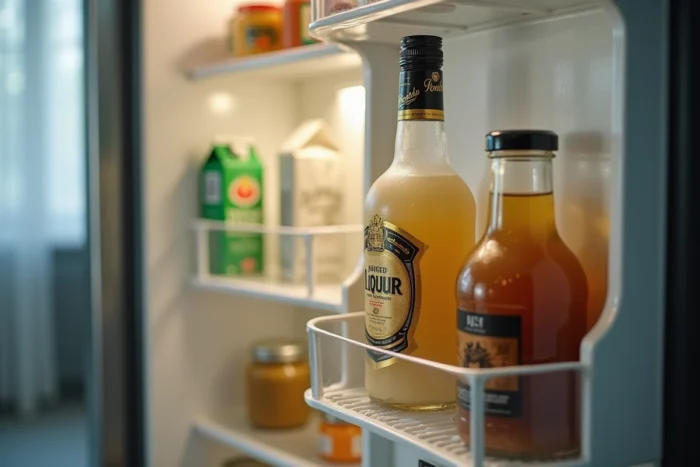
- Store the bottle in the refrigerator, not in the cupboard. The recommended range is between 0 and 25 °C, but a standard refrigerator (around 4 °C) keeps the cream emulsion more stable than a kitchen cabinet exposed to ambient temperature fluctuations.
- Avoid direct light. UV rays degrade certain aromatic compounds and can alter the color of the liqueur. A refrigerator solves this problem by default, but if you leave the bottle on a countertop, keep it away from a window.
Even with these precautions, the aromatic quality declines after a few months. The goal is to slow down the process, not to stop it.
Recognizing Baileys Whose Aromas Have Turned
The date printed on the bottle provides a reference, but your senses remain the best verification tool. Before throwing away or serving Baileys that has been open for a long time, three quick checks are sufficient.
First, the nose. Fresh Baileys emits creamy, slightly sweet notes, with a hint of whiskey in the background. If the smell turns sour or resembles spoiled milk, the cream has begun to degrade. This signal is the most reliable.
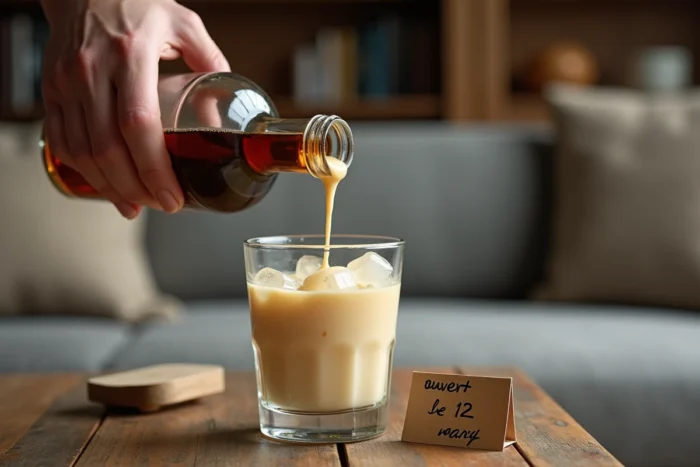
Next, the texture. Pour a little liqueur into a glass. Clumps or a grainy consistency indicate a broken emulsion. A Baileys in good condition flows smoothly and uniformly.
Finally, the taste. If the nose and texture seem correct, taste a small amount. A flat profile, lacking depth, with an unusual bitterness, indicates that the aromas have lost their complexity. The liqueur remains safe to consume, but the tasting pleasure is no longer present.
Opened Baileys in Cocktails or Cooking: When the Taste Diminishes
Baileys whose aromas have smoothed out is not necessarily to be thrown away. In cocktails, mixed with hot coffee or an espresso, the additional ingredients partially compensate for the loss of complexity. In cooking, in a tiramisu or chocolate glaze, the cooking masks the decrease in aromatic finesse.
On the other hand, Baileys served alone over ice or as a digestif directly exposes the palate to the quality of the liqueur. For this use, it is better to choose a bottle that has been open for less than six months.
Baileys technically keeps well beyond a few months after opening, but the window in which its cream, cocoa, and whiskey aromas remain fully expressive closes sooner than the expiration date suggests. A well-sealed cap, a refrigerator, and consumption in the first months after opening remain the best strategy to enjoy what this liqueur has to offer.