Cleaning a house without resorting to synthetic chemical products relies on a handful of simple ingredients, often sold in the food aisle. The following ranking highlights ten natural cleaning products selected based on three criteria: versatility of use, availability in stores, and documented absence of health risks. Each product is presented with its concrete applications and limitations.
1. White vinegar
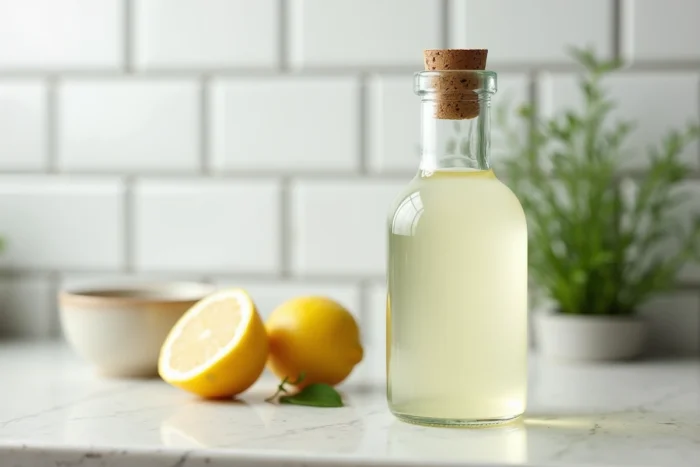
White vinegar (or alcohol vinegar) descalers, deodorizes, and disinfects most surfaces. On faucets, shower walls, or kettles, it dissolves limescale without scratching. Several concentrations exist, the most common being around 8%.
Persistent white stains around the sink disappear with a cloth soaked in pure vinegar, left for about fifteen minutes. Added to the rinse compartment of the washing machine, it replaces chemical fabric softener and prevents drum buildup.
Its limitation: it should never be applied to marble or natural stone, as the acid attacks these surfaces. Choosing from the natural cleaning products for the home suitable for each material remains the best way to avoid this type of damage.
2. Baking soda
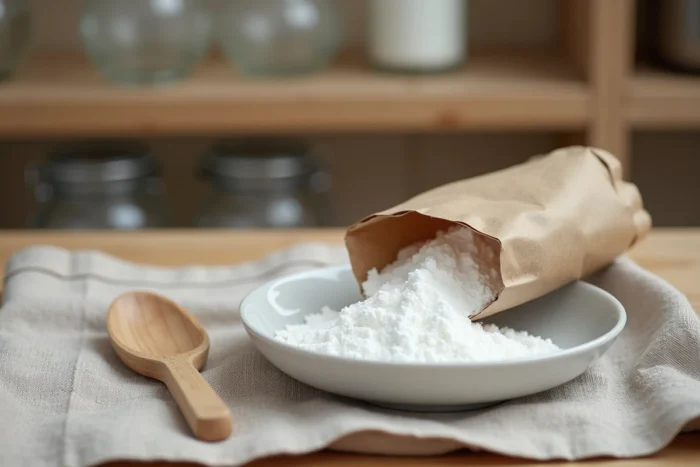
Slightly abrasive and deodorizing, baking soda tackles cooked fats, refrigerator odors, and stains on textiles. It comes in food and technical versions. Food-grade baking soda is the most versatile: it is used both in cooking and for cleaning.
Sprinkled on a damp baking sheet and left to act overnight, it loosens burnt residues. Mixed with a little water to form a paste, it cleans tile joints without aggressive products.
3. Black soap
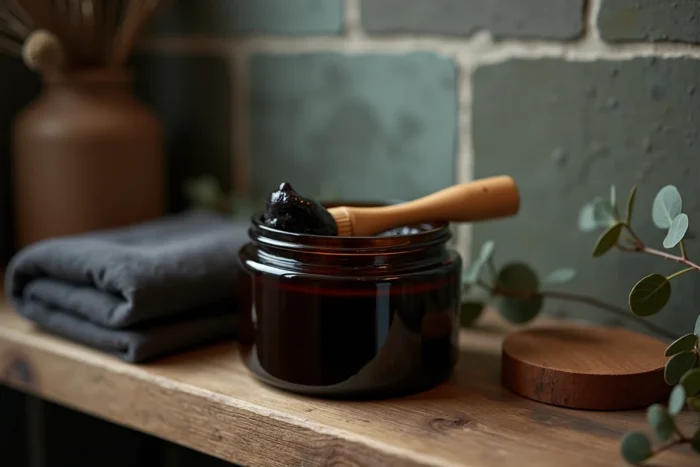
Household black soap, made from linseed or olive oil, is a powerful degreaser suitable for almost all floors: tiles, terracotta, oiled parquet, linoleum. Diluted in a bucket of hot water, it leaves a discreet protective film on surfaces.
A few drops are enough for an entire bucket, making it one of the most economical products on this list. Be careful not to confuse it with cosmetic black soap, which has a different composition.
4. Washing soda
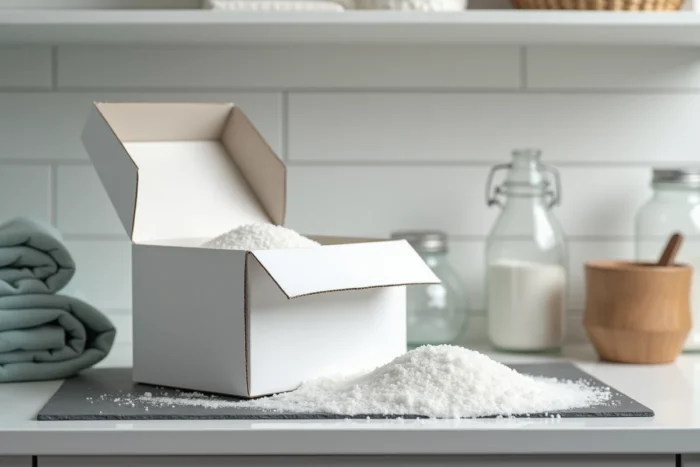
More alkaline than baking soda, washing soda (sodium carbonate) degreases heavily soiled surfaces: hoods, ovens, cooking surfaces. It also helps to partially unclog pipes when poured with boiling water.
Always wear gloves when handling, as its high pH irritates the skin. This simple precaution distinguishes it from baking soda, which can be used barehanded.
5. Marseille soap
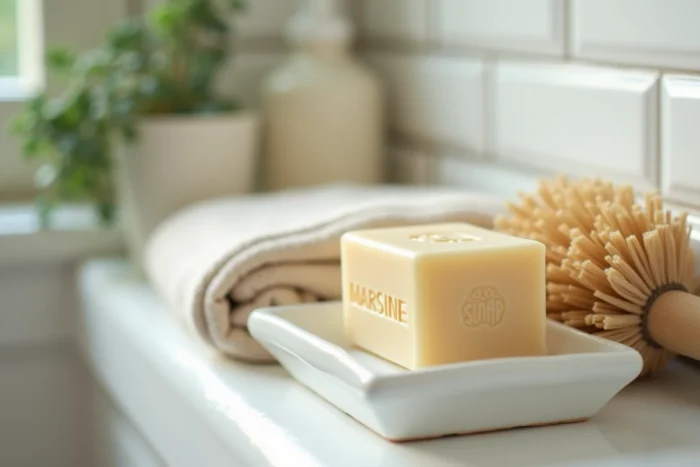
Biodegradable and preservative-free when authentic, Marseille soap serves as a base for making homemade laundry detergent. Grated and melted in hot water, it produces an effective washing liquid for everyday laundry.
To recognize it, check that it contains at least 72% vegetable oils and no synthetic additives. Versions sold in supermarkets sometimes add fragrances or colorants that negate the ecological benefit of the product.
6. Citric acid
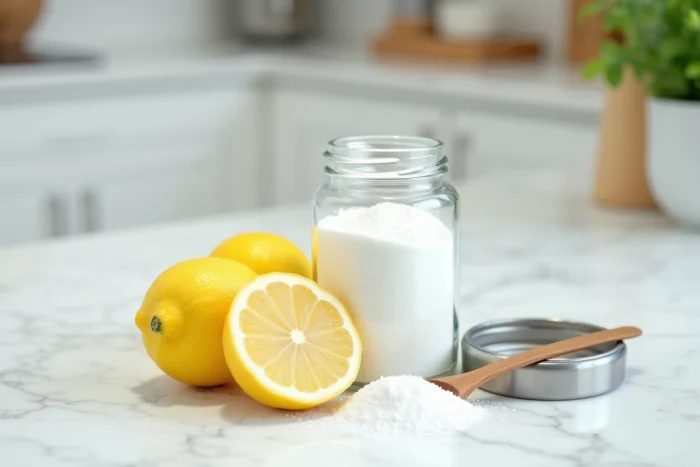
Citric acid descalers appliances (coffee maker, kettle, dishwasher) faster than vinegar. Dissolved in hot water, it also removes rust stains from stainless steel.
Never mix citric acid and bleach: the chemical reaction releases chlorine gas, toxic even in small amounts. This is a common mistake in homemade recipes found online.
7. Sodium percarbonate
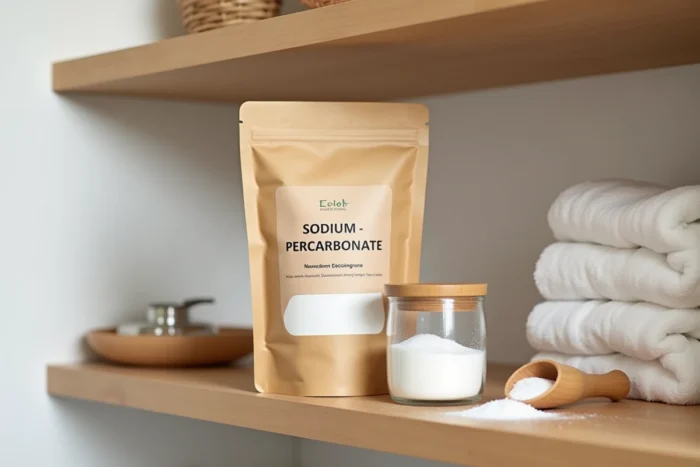
Sodium percarbonate releases active oxygen when in contact with hot water. It is a natural bleaching and stain-removing agent, effective on tea, coffee, or blood stains on white textiles. It replaces chlorinated stain removers in the washing routine.
Its action requires a water temperature of at least 40 °C. Below this, the release of oxygen is too slow to be useful.
8. Sommières clay
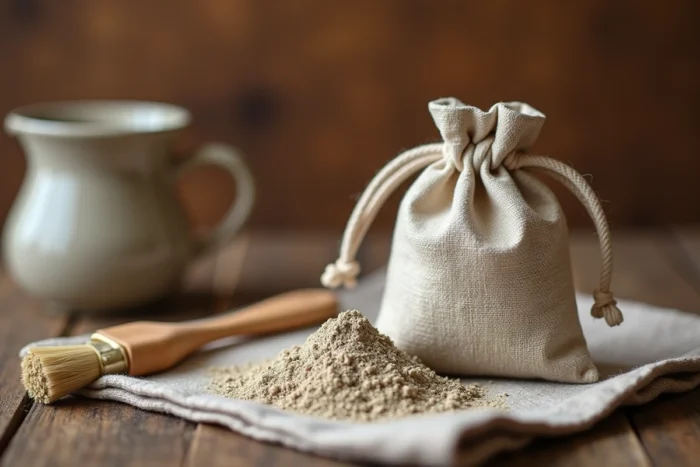
This fine clay absorbs grease stains without water or scrubbing. Sprinkled on an oil, butter, or sauce stain on fabric, carpet, or even leather, it absorbs the greasy substance in a few hours. Then, simply vacuum the powder.
Sommières clay only works on greasy stains. For colored stains (wine, ink), it has no notable effect. Its use remains targeted, but there is no equivalent for this type of dirt.
9. Climbing ivy decoction
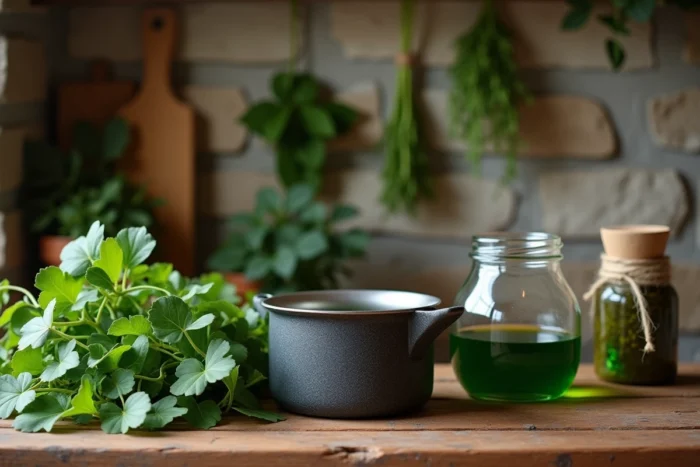
An increasingly documented zero-waste alternative, climbing ivy decoction works as a local plant-based laundry detergent. The leaves contain saponins, natural surfactants that foam in hot water and dissolve textile dirt.
The preparation involves boiling about fifty leaves in a liter of water, then filtering. The resulting liquid can be stored for a few days in the refrigerator. Its stain-removing effectiveness is lower than that of Marseille soap on stubborn stains, but it is suitable for lightly soiled everyday laundry.
10. Microfiber cloth
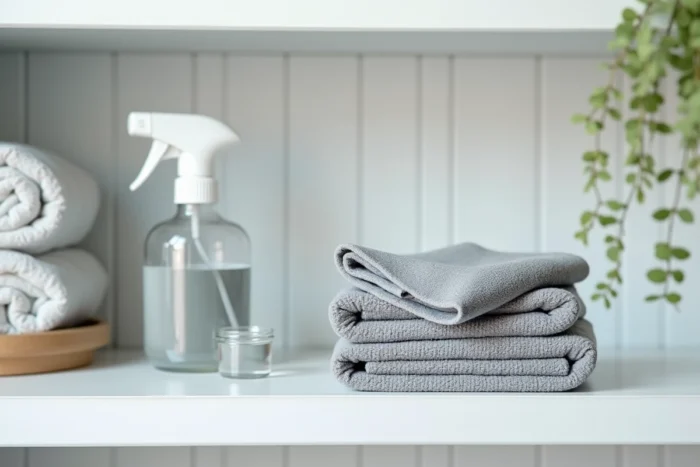
The microfiber cloth is not a product in the chemical sense, but it significantly reduces the need for cleaners. Damped with just water, it captures dust, bacteria, and fingerprints on windows, screens, and smooth surfaces.
- On windows, a pass with a damp microfiber cloth followed by a second dry one removes streaks without chemical spray.
- On furniture, it captures dust instead of dispersing it into the air, unlike traditional dusters.
- Machine washable hundreds of times, it generates very little waste over its lifespan.
A point of caution: the ARS Auvergne-Rhône-Alpes recommends limiting the addition of essential oils in homemade cleaning products, due to the volatile organic compounds they release into indoor air. Scenting your cloth or laundry with a few drops of tea tree or lavender is a common habit, but not harmless for the respiratory tract, especially in the presence of young children.
With these ten products, almost all common household tasks can be covered. White vinegar and baking soda form the basic duo, washing soda and percarbonate take over on stubborn stains, and the microfiber cloth limits the need to resort to any product.