
The real estate market in Tarn is undergoing a transitional phase. After a marked decline in transaction volumes nationwide between 2021 and 2024 (close to 30% according to Vendrebien), a recovery of about 13% is beginning in 2025. This context of gradual recovery, far from any euphoria, redefines the entry conditions for those wishing to invest in real estate in Tarn.
Negotiating in a post-trough market: what the recovery of volumes changes
A market that is recovering after a lull does not behave like a market in full acceleration. Sellers who did not find buyers during the downturn often remain open to price discussions. Properties that have been on the market for several months constitute a negotiation pool that rapid upward phases do not allow.
For an investor, the current negotiation window remains wider than in times of tension. Lengthened selling times provide time to analyze, compare, and formulate reasoned offers. However, this window tends to close as volumes rise and competition among buyers strengthens.
The Tarn department, located in Occitanie between Toulouse and the foothills of the Massif Central, benefits from enhanced accessibility via the A68 and A61 routes. Buyers working in the Toulouse urban area find prices significantly lower than those in the metropolis, which fuels a steady rental demand. Industry professionals support this local dynamic, as proposed by https://www.cap-immobilier-81.com/ throughout the department.
Real estate prices in Albi: the end of cheap Tarn
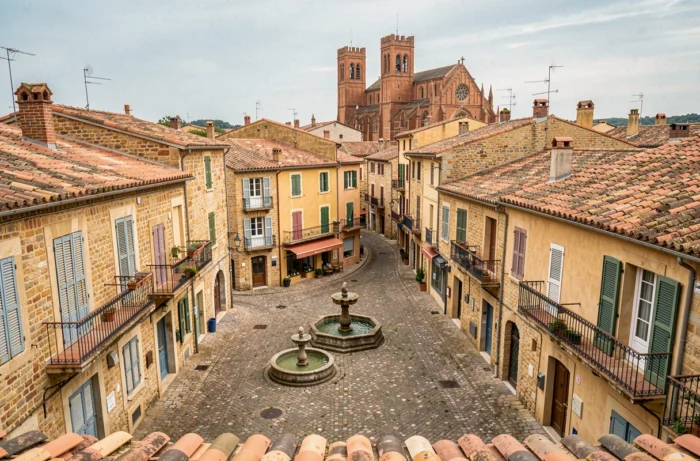
Albi, the prefecture of the department and a UNESCO World Heritage city, shows a significant price increase over five years. According to Logic-Immo, prices in Albi have risen by about 25% over five years, with a median price now exceeding levels that many still recently associated with “cheap Tarn.”
This evolution necessitates a change in strategy. A rental investment in Albi can no longer rely solely on a low purchase price to generate profitability. Rental yield now depends on the quality of the property and its positioning: proximity to the historic center, condition of the housing, energy performance.
The rental demand in Albi remains diverse. The city attracts students, civil servants, and professionals linked to Toulouse, about 45 minutes away by road. This diversity of tenant profiles limits the risk of vacancy, provided that a property suitable for the expectations of the targeted segment is offered.
Castres and Gaillac: different market profiles
Castres, a sub-prefecture with about 42,000 inhabitants, maintains a diverse economic fabric between the pharmaceutical and textile industries. Prices there remain more accessible than in Albi, which can improve gross yield. Field reports vary on the ease of renting in certain peripheral neighborhoods, and the choice of location remains crucial.
Gaillac, known for its vineyards, attracts a different profile of buyers: second homes, career changers, retirees. The Gaillac market operates more on primary residences and vacation homes than on pure rentals. An investor focused on rental yield will find less depth of demand there than in Albi or Castres.
Rental profitability in Tarn: variables to master
Calculating a gross yield based on the purchase price and monthly rent is not enough to assess the relevance of a rental investment in Tarn. Several parameters impact net profitability and deserve careful analysis before any commitment.
- The property tax, which varies significantly from one municipality to another in the department, can absorb a considerable portion of the annual rent. Comparing municipal rates before purchasing avoids unpleasant surprises.
- The cost of energy renovation work, made more visible by the constraints related to the DPE, weighs on older properties. A property classified F or G requires a budget for compliance that reduces the actual profitability in the early years.
- Rental vacancy, even low in the city centers of Albi or Castres, can last several months in rural areas of the department. The actual occupancy rate conditions the viability of the project much more than the theoretical rent displayed.
Furnished or unfurnished rental: a tax arbitration
The choice between furnished and unfurnished rental changes the tax applicable to rental income. The non-professional furnished rental regime (LMNP) allows for the depreciation of the property and furniture, which reduces the taxable base. This regime remains attractive in Tarn, where moderate purchase prices allow for a positive cash flow to be generated more quickly than in tense areas.
Unfurnished rental, subject to property income, offers less tax flexibility but better corresponds to a demand for stable tenants (families, employees on permanent contracts). The choice of tax regime depends on both the profile of the property and that of the investor.
Rent control and regulation: where does Tarn stand
Tarn is not part of the areas where rent control is being experimented with. The municipalities in the department are not included in the areas concerned by the measures currently being extended at the national level. For an investor, this means freedom in setting the rent, governed only by the local market.
The available data do not allow for a conclusion that this situation will remain stable in the long term. Experiments with rent control are subject to discussions about their extension and geographical expansion. An investment calibrated on a current market rent must integrate this regulatory risk, even if it remains hypothetical in the short term in Tarn.
The law of August 18, 2026, aimed at modernizing the management of the State’s real estate assets, although it does not directly concern private investors, reflects an active legislative context on real estate issues. Keeping track of regulatory developments is part of the prerequisites for any rental investment project in the department.
Tarn still offers favorable investment conditions compared to more saturated markets in Occitanie. The proximity to Toulouse, prices that remain below those of the metropolis, and a rental demand fueled by varied profiles constitute solid fundamentals. The main risk for the investor would be to reason with the frameworks of five years ago, while prices have already integrated part of the attractiveness of the territory.