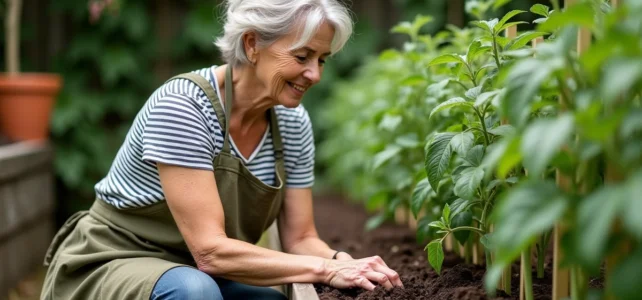
A natural fertilizer is not chosen based on a label. It is chosen according to the existing soil, the type of crop, and the timing in the rotation. We too often observe over-fertilized gardens with nitrogen when the limiting factor is phosphorus or the physical structure of the substrate. Before adding anything, the first question remains that of soil analysis.
C/N Ratio and Mineralization Rate: the Technical Criterion that Conditions Everything Else
Most guides classify natural fertilizers by origin (animal, plant, mineral). This approach masks the determining parameter: the carbon/nitrogen (C/N) ratio conditions the rate of nutrient release. Dried blood has a very low C/N ratio, which means rapid mineralization, sometimes in just a few weeks. Ground horn, with a higher C/N ratio and a dense keratinous structure, releases its nitrogen over several months.
Choosing between the two is not a matter of preference, but of aligning with the cropping cycle. For a tomato crop transplanted in May, a slow-release amendment incorporated at planting covers the summer load. Dried blood is better suited as a quick boost for short-cycle leafy vegetables like lettuce or spinach.
The distinction between organic amendment and fertilizing fertilizer is often overlooked. Mature compost is not a fertilizer in the strict sense: its main role is to improve soil structure, water retention, and biological activity. Its contribution of directly assimilable nutrients remains modest. The classic mistake is to rely solely on compost to feed nutrient-hungry crops like cucurbits or solanaceae.
When asking which natural fertilizer to adopt for the vegetable garden, we recommend reasoning by complementarity: a base amendment (compost, composted manure) combined with a targeted fertilizer according to the limiting factor (nitrogen, phosphorus, or potassium).
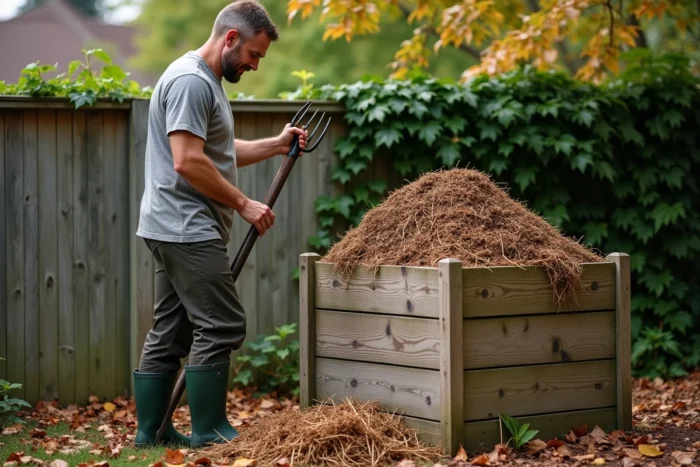
Green Manures in the Vegetable Garden: Fertilizing Without Buying Anything
Green manures represent a radically different fertilization strategy. Instead of adding a product, one grows a plant that restructures the soil and fixes nutrients, then mows it and incorporates it superficially to decompose on-site.
A sowing of oats and peas between two crops rebuilds nitrogen fertility through the symbiotic fixation of legumes. The pea captures atmospheric nitrogen via its root nodules; the oat, in turn, structures the soil deeply with its fibrous root system. Mowed and then left on the surface or lightly buried, these residues feed microbial life and gradually release their nutrients.
This approach is gaining traction in current gardening practices because it reduces dependence on external inputs. However, it requires having a free growing slot, which necessitates rigorous planning of the rotation.
When to Sow a Green Manure in the Vegetable Garden
Sowing is done as soon as a bed becomes available. After a potato harvest in July, a mixture of crimson clover and rye sown immediately covers the soil throughout the autumn. Mowing occurs before seed set, ideally in the following spring, a few weeks before the next planting. The soil thus recovers fresh organic matter without any purchase of fertilizer.
Sheep Wool, Plant Extracts, and Ashes: Three Underutilized Natural Fertilizers
Beyond compost and ground horn, several local resources deserve precise technical attention.
- Sheep wool functions as a hybrid mulch-fertilizer. Rich in nitrogen and sulfur, it decomposes slowly at the base of long crops (tomatoes, eggplants, squashes). It retains moisture, limits weeds, and releases its elements throughout the season. Its value increases in sheep-rearing regions where it remains an abundant and underutilized resource.
- Nettle extract provides a nitrogen supplement during the growing season, but its dosage requires precision. Diluted to about one part to ten parts water for watering at the base, it stimulates leaf growth. Used too concentrated or too frequently, it causes an excess of nitrogen that weakens plants against pests and fungal diseases.
- Wood ash concentrates potassium and calcium. It promotes flowering and fruiting, making it a relevant addition for fruiting vegetables. However, it alkalizes the soil: on already calcareous land, the addition of ash exacerbates the blockage of iron and manganese. We recommend not exceeding a thin layer per season and checking the pH before any regular application.
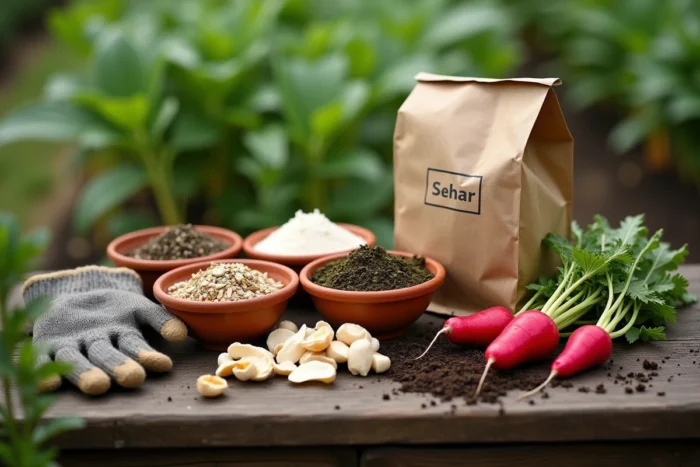
Adapting Natural Fertilizer to the Type of Vegetable Grown
Not all vegetables draw the same elements in the same proportions. Reasoning by botanical family simplifies the management of fertilization.
Fruiting Vegetables and Nutrient-Hungry Crops
Tomatoes, peppers, squashes, and zucchinis consume a lot of potassium during the fruiting phase. An application of ash in spring, combined with a mulch of semi-mature compost, covers basic needs. Comfrey in extract constitutes the best potassium supplement during the season, thanks to its naturally high potash content.
Leafy Vegetables and Short Cycles
Lettuce, spinach, and cabbages primarily require readily available nitrogen. Dried blood incorporated before sowing or diluted nettle extract for watering yield visible results in a few weeks. On soils enriched with compost for several years, these inputs become superfluous: the stock of humus releases enough nitrogen through natural mineralization.
Legumes
Beans, peas, and broad beans fix their own nitrogen. Providing them with a nitrogen fertilizer is counterproductive: it inhibits root nodulation. Legumes only need a well-structured soil and a moderate supply of phosphorus (bone meal or natural phosphate) for good establishment.
Reducing Dependence on Fertilizers: The True Challenge of a Sustainable Vegetable Garden
The question has evolved. It is no longer just about replacing a chemical fertilizer with a natural equivalent, but about building a cultivation system that minimizes external inputs. Long rotation, systematic green manures between two crops, permanent mulching, and on-site composting form a virtuous circle where the soil nourishes itself from its own residues.
A vegetable garden managed over several seasons sees its fertilization needs decrease year after year. The best natural fertilizer is the one that you eventually no longer need, because the soil’s fertility is self-maintaining. This is the model towards which the most advanced practices converge, whether they are market gardening or amateur.